CLARKSVILLE, TN (CLARKSVILLE NOW) – Two decades have passed since the World Trade Center was destroyed in New York City, an attack that triggered the longest military conflict in American history. For those who saw the destruction, such as retired Army nurse Maj. John Eiland of Clarksville, the memories are still haunting.
Eiland visited ground zero on Sept 21, 2001, while working at the U.S. Army Military Academy at West Point. He was encouraged to go so he could share the experience with his students.
-
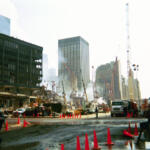
- Cleanup efforts at ground zero in New York following 9/11, in September 2001. (John Eiland, contributed)
-
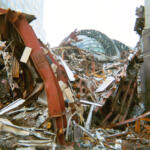
- Wreckage at ground zero in New York following 9/11, in September 2001. (John Eiland, contributed)
-
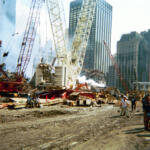
- Cleanup efforts at ground zero in New York following 9/11, in September 2001. (John Eiland, contributed)
-
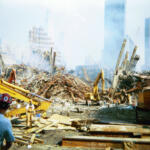
- Cleanup efforts at ground zero in New York following 9/11, in September 2001. (John Eiland, contributed)
-
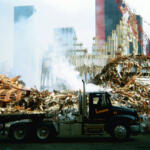
- Cleanup efforts at ground zero in New York following 9/11, in September 2001. (John Eiland, contributed)
-
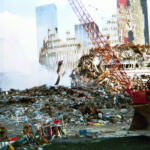
- Wreckage at ground zero in New York following 9/11, in September 2001. (John Eiland, contributed)
-
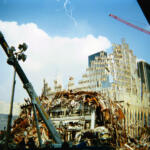
- Wreckage at ground zero in New York following 9/11, in September 2001. (John Eiland, contributed)
“(The Army) is in the middle of a mess a lot, and that’s why they were encouraging me to go down there, to take a look at that. Then I could go back to the schoolhouse in Texas; I could tell them, ‘Dudes this is really real, so take toll of your training, pay attention to your education, because we never know when this will happen. Who knows what the next 9/11 will look like, and who knows where it will happen,’” Eiland said.
He wrote about his experience for the U.S. Army Medical Department Journal, sharing the stories of citizens and first responders he interviewed.
Memories of ground zero
It’s common for people to recall where they were when they heard the World Trade Center was destroyed, but Eiland said nothing could compare to seeing the damage firsthand.
“The first thing that struck me was the sheer enormity of it. There’s no way you can see it on television, no way you can read about it in the papers, until you’re standing up on the 15th floor of a building across the street looking down at it and seeing just the size of the destruction,” Eiland said.
-
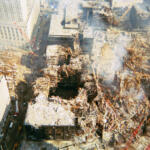
- Overhead view of wreckage at ground zero in New York following 9/11, in September 2001. (John Eiland, contributed)
-
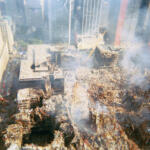
- Overhead view of wreckage at ground zero in New York following 9/11, in September 2001. (John Eiland, contributed)
-
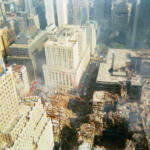
- Overhead view of wreckage at ground zero in New York following 9/11, in September 2001. (John Eiland, contributed)
-
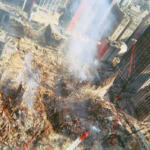
- Overhead view of the wreckage at ground zero in New York following 9/11, in September 2001. (John Eiland, contributed)
-
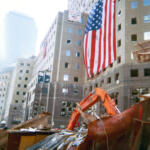
- Damage at ground zero in New York following 9/11, in September 2001. (John Eiland, contributed)
-
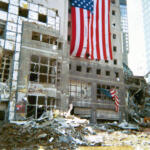
- Damage to surrounding buildings at ground zero in New York following 9/11, in September 2001. (John Eiland, contributed)
-
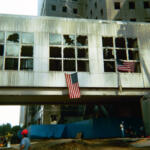
- Damage at ground zero in New York following 9/11, in September 2001. (John Eiland, contributed)
-
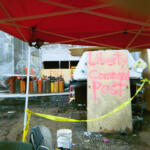
- The makeshift Liberty Command Post at ground zero in New York following 9/11, in September 2001. (John Eiland, contributed)
What really stuck with him, and others who were there, was the smell.
“When some of us got together on the 10-year anniversary, we all remarked that it was the smell that brings back all the memories. When you first start walking up to it, it smells kind of like a fireplace that’s been lit. Then you start walking in, and it’s got this kind of putrid little smell to it. By the time you get into it, it smells like a garbage dump when they set it on fire,” Eiland said.
-
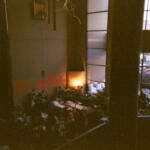
- A triage center set up by first responders at ground zero in New York following 9/11, in September 2001. (John Eiland, contributed)
-
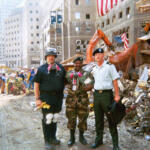
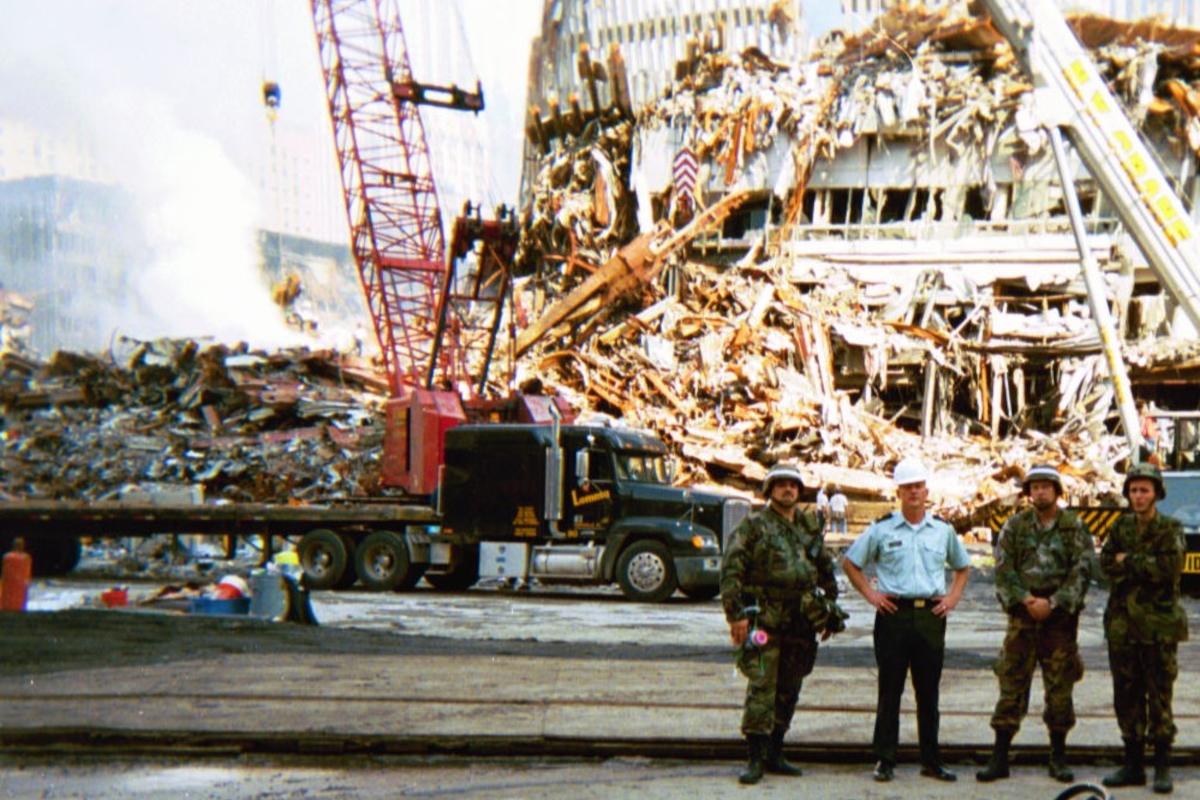
- Maj. John Eiland, right, stands with a first responder and soldier at ground zero in New York following 9/11, in September 2001. (Contributed)
-
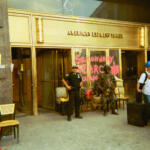
- The entrance to 200 Vesey Street (formerly Three World Financial Center), which suffered significant damage during the 9/11 attacks in New York, in September 2001. (John Eiland, contributed)
-
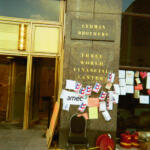
- The entrance to 200 Vesey Street (formerly Three World Financial Center), which suffered significant damage on 9/11 (John Eiland, contributed)
-
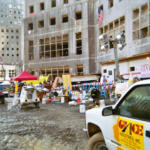
- The ground was caked in ash causing difficulty for first responders and cleanup crews at ground zero in New York following 9/11, in September 2001. (John Eiland, contributed)
-
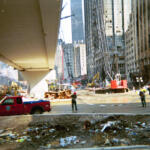
- Cleanup efforts at ground zero in New York following 9/11, in September 2001. (John Eiland, contributed)
-
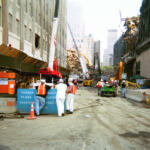
- Cleanup crews worked for weeks to remove the wreckage from ground zero in New York following 9/11, in September 2001. (John Eiland, contributed)
A lasting impact
Having worked in emergency and operating rooms since 1972, Eiland is no stranger to intense triage. He said the medical responders at 9/11 faced an unexpected challenge: the waiting.
After an initial surge of patients, the beds went empty. There weren’t enough survivors to fill them. Most patients were other first-responders seeking treatment for injuries sustained on the job before going back to work.
“The healthcare workers were trauma trained, and suddenly there’s no patients. That’s a mind screw, when you’re supposed to be doing something and you can’t do anything because there are no patients,” Eiland said.
Many first responders continue to bear the weight of the experience, both physically and mentally. “Remember the people that were there and are still carrying the scars,” Eiland said.

Moving forward
Eiland said he still carries some demons from the experience. One thing that bothers him are the 9/11 conspiracy theories.
“There are still people that swear 9/11 never happened, and, if it did, it was a president that ordered a secret strike to get us into a war,” Eiland said. “It gets real personal after awhile. It’s hard to put yourself in the line of fire and then have somebody tell you it never happened. I just can’t wrap my head around that.”
He has returned to ground zero once since his initial visit, before the monument was erected. He had planned to go last year, but he postponed the trip due to the COVID-19 pandemic. He hopes to make that trip soon, to see how things have changed, and hopefully to add some new memories to those from 20 years ago.